 DIGISOLAGENCY
Creating a Prediction Market
Starting in 2014, the prediction market has grown steadily, reaching widespread recognition in 2020 with the launch of Polymarket, which propelled dozens of products to rapid growth and opened up a unique experience for users — the ability to bet on almost anything in the world using transparent blockchain technology.
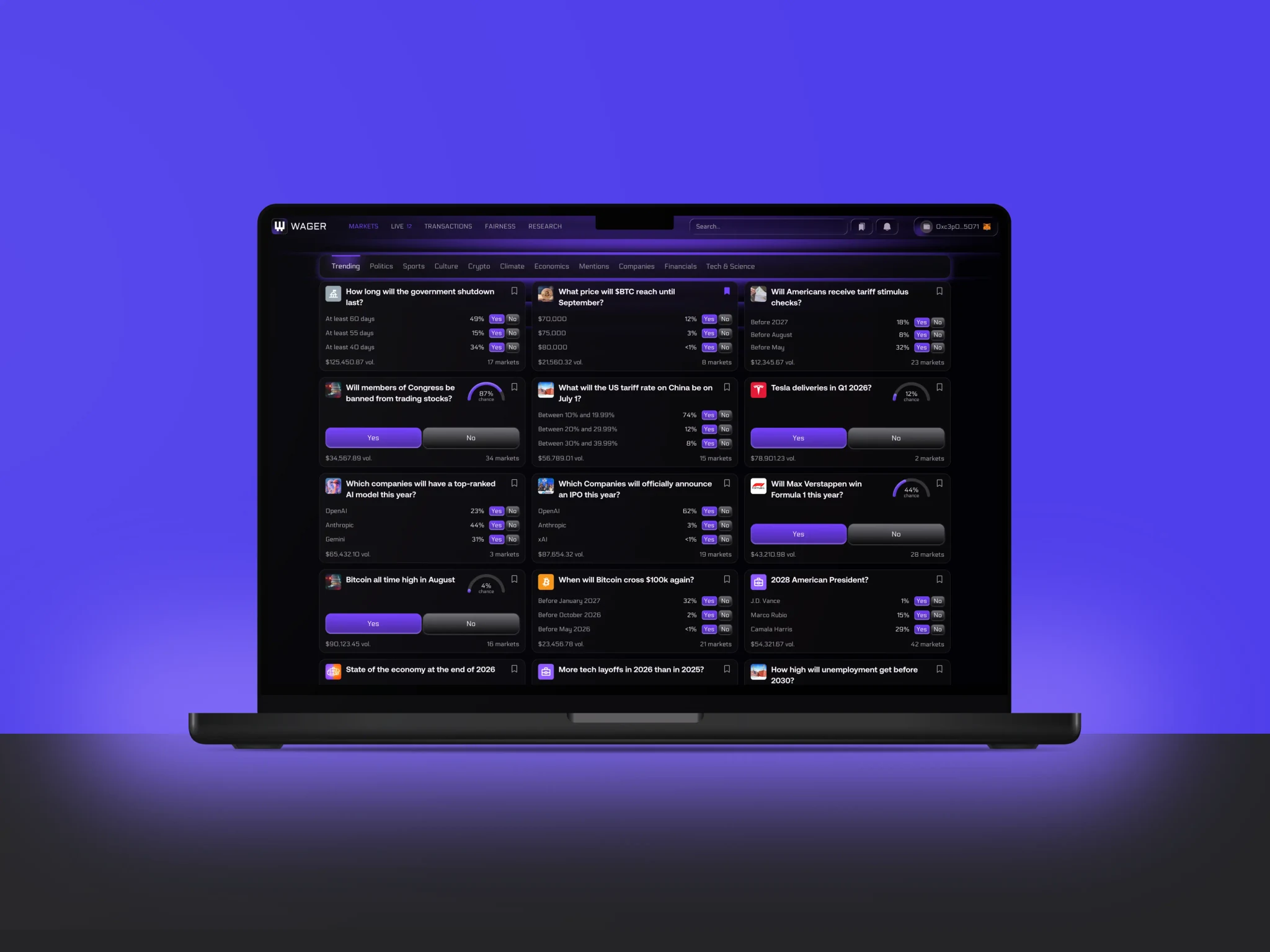

Essentially, a prediction market is a decentralized forecasting platform that can be built on Polygon, Solana, Ethereum, or any other blockchain, where participants place bets with cryptocurrency on the outcomes of real-world events.
In 2026, most major prediction markets — like Kalshi, Polymarket, and newer platforms such as Opinion — operate using either an order-book model or an AMM (automated market maker). In simple terms, these are peer-to-peer trading venues where participants place buy and sell orders, and the platform matches them. Prices (which people treat as "odds") move dynamically based on supply and demand, shaped by trader positioning and available liquidity, rather than being fixed by a central bookmaker or calculated purely through a traditional pari-mutuel pool.
What is a Prediction Market
A notable exception — and a fast-rising contender — is Hyperliquid's proprietary HIP-4 outcome trading system. Hyperliquid is primarily known as a decentralized perpetuals exchange, but HIP-4 introduces fully collateralized, fixed-range outcome contracts that can be used for prediction markets and options-like outcome derivatives. Because this is integrated into Hyperliquid's high-performance on-chain infrastructure, it has become especially attractive to crypto-native traders, seeing strong adoption and significant event-based trading activity.
Overall, prediction markets combine order-driven price discovery with increasingly polished on-chain execution. They function as information aggregation tools: the crowd's collective trading activity pushes prices toward implied probabilities. Compared to earlier generations of prediction markets, modern platforms also tend to offer smoother resolution via automated oracles, faster settlement, and increasingly "gasless" user experiences that remove friction for mainstream users.
Value of the prediction market
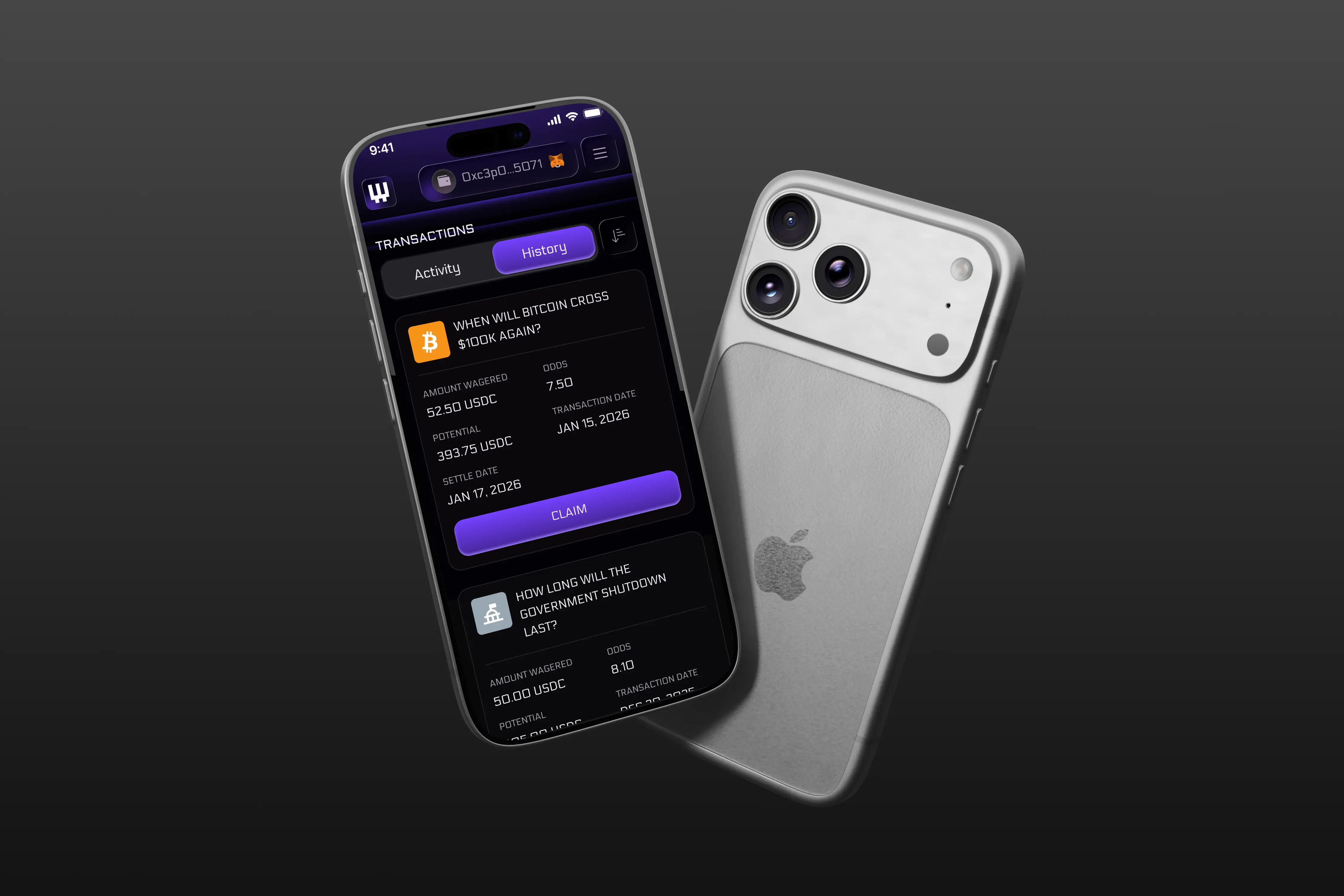
Prediction markets serve several functions in the Web3 ecosystem. On the one hand, they provide transparent pricing for future events that remain uncertain, from "Will Liverpool win?" to "Who will become mayor of a village in the suburbs of Rome?" and even decisions regarding blockchain protocol management — all of which are subject to clear economic construction and betting. Unlike centralized platforms, crypto prediction markets eliminate counterparty risk — smart contracts hold funds and enforce rules mathematically.
The architecture of modern prediction markets demonstrates how these markets can balance decentralization and user experience. Using USDC as a betting token, for example, protocols can provide the stability that mainstream users are accustomed to, while retaining the advantages of blockchain transparency and combinability.
Value of the prediction market
Prediction markets serve several functions in the Web3 ecosystem. On the one hand, they provide transparent pricing for future events that remain uncertain, from "Will Liverpool win?" to "Who will become mayor of a village in the suburbs of Rome?" and even decisions regarding blockchain protocol management — all of which are subject to clear economic construction and betting. Unlike centralized platforms, crypto prediction markets eliminate counterparty risk — smart contracts hold funds and enforce rules mathematically.
The architecture of modern prediction markets demonstrates how these markets can balance decentralization and user experience. Using USDC as a betting token, for example, protocols can provide the stability that mainstream users are accustomed to, while retaining the advantages of blockchain transparency and combinability.
Prediction market development challenges
Creation of a ready-to-use predictions market involves solving a number of technical and design tasks, namely:
Oracle integration
Gas problem
Economic security
- resistance to manipulation
- fair calculation
Regulatory Uncertainty
Technologies used in the development of prediction markets
This technical stack is based on best practices for creating DeFi protocols in 2026:
On-Chain Layer Architecture
You can use minimal EIP-1167 proxy clones deployed using a factory template. This allows you to create an unlimited number of pools for specific events without redeploying the full contract logic, which significantly reduces gas costs. That is, each contract is a lightweight proxy that points to shared implementation logic, with the ability to be updated in place through the factory.
Oracle Resolution Layer
The integration of two oracles solves automation and resolution issues. Chainlink Automation monitors pools for overdue resolutions, while Chainlink Functions executes custom JavaScript code to retrieve event results from APIs. This hybrid approach provides both reliability and flexibility.
Deployment Layer (L2)
The use of Polygon (other blockchains should be considered separately) provides high throughput and low transaction costs, which are necessary for solutions that provide consumer-oriented betting functionality. Users can place small bets without worrying that gas fees will eat into their winnings.

Conclusion
Creating a prediction market requires a balance between technical aspects and user accessibility. The architecture of our solutions demonstrates how modern protocols use Ethereum infrastructure — layer 2 scaling, flexible oracles, upgradeable contracts — to create products that compete with centralized alternatives in both functionality and trustworthiness.
The technical challenges remain significant: oracle reliability, gas optimization, economic mechanism design, and regulatory compliance require careful review by a team of experts. However, the composability of blockchain infrastructure means that developers can use proven components such as Chainlink oracles and OpenZeppelin contracts instead of building everything from scratch.


